
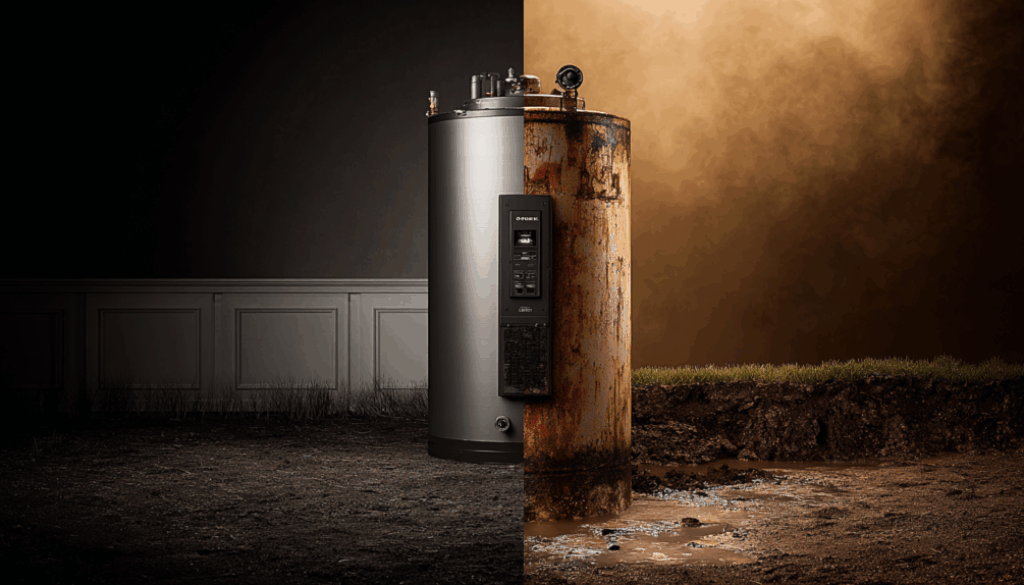
The Buried Danger Beneath Your Dream Home
For many homebuyers, oil tanks aren’t the first thing that comes to mind when touring a property. Yet for certain homes — especially older ones in British Columbia — understanding the history, risks, and legal implications can save you from costly surprises.
A Common Source – Oil Heating in Local Homes
In the early 20th century, coal was the most common home heating source, but by the 1940s and 50s, oil heating began replacing coal in many urban areas. Oil was cleaner, more convenient, and paired well with the design of post-war houses.
From the 1950s through the early 1970s, oil heating reached its peak, particularly in Vancouver, Burnaby, New Westminster, Victoria, and older communities on Vancouver Island. Many homes from this era had underground steel storage tanks buried in the yard or above-ground tanks in basements or on concrete pads.
By the mid-1970s to early 1980s, natural gas lines expanded, and homeowners gradually converted their heating systems. Unfortunately, many underground tanks were simply disconnected and left in place — some drained, others not — and eventually forgotten beneath lawns, patios, or driveways.
After the 1980s, very few new tanks were installed in urban areas, though some rural and island properties without natural gas access continued to rely on above-ground oil tanks.
Why Is This Still Relevant
Even decades later, oil tanks are still turning up in home sales — especially in houses built before the mid-1970s. Here’s why buyers should care:
Environmental Liability
If a tank leaks, the homeowner (including a new buyer) can be responsible for cleanup costs — even if the leak happened years before. Remediation can cost tens of thousands of dollars, and once contamination is found, environmental testing is mandatory.Hidden Past Use
A home may now have a natural gas furnace, but that doesn’t mean it never had an oil tank. Without proper removal records, the original tank could still be buried and undetected.Insurance and Mortgage Complications
Some insurers refuse coverage on properties with active or abandoned oil tanks unless they’re certified safe or removed. Lenders may also require proof of removal before approving financing.Impact on Resale
Unresolved tank issues can affect a home’s marketability. Future buyers will request the same due diligence, and any discovered contamination can significantly impact value.
Why Buyers Should Ask About Oil Tanks
When buying — especially for homes built before the mid-1970s — always include oil tank inquiries in your due diligence. This means:
Checking municipal records for permits or reports related to oil tanks.
Hiring a scanning service that uses ground-penetrating radar or magnetic detection to check for underground tanks.
Obtaining written documentation from a qualified professional if a tank has been removed or decommissioned.
Even if the seller claims there’s no oil tank, without official records, you’re relying on assumptions — and in real estate, assumptions can be costly.
A Proactive Step for Peace of Mind
Oil tanks are a perfect example of how something from decades ago can still affect a property today. While many have been removed, enough remain buried to make a thorough check worthwhile.
A simple question about oil tanks during the buying process can prevent major headaches later, protecting your investment, your peace of mind, and your wallet. For homes built before the mid-1970s, knowing what might be under the surface is just as important as knowing what’s inside the walls.