
The Psychology Behind Today’s Pricing Wars
If the 2021 market was a seller’s paradise — chaotic, fast, and unforgiving for buyers — then today’s market is the mirror image. There’s plenty of inventory. Rates have eased. Buyers have time, choice, and real negotiating power for the first time in years. On paper, it should feel like a great time to buy.
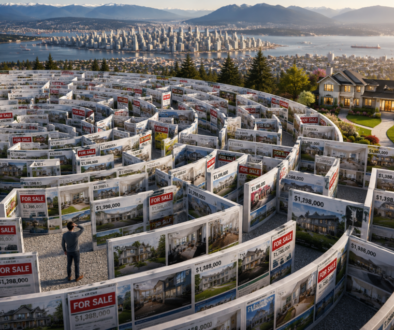
And yet something isn’t quite right on the selling side either. With so many similar properties competing for the same pool of cautious buyers, some sellers are doing something that feels logical in the moment but ends up hurting everyone: undercutting each other on price. A condo here drops its ask by $20,000. The unit two floors up responds by dropping theirs. Before long, the whole building’s value has quietly eroded — and not because the market demanded it, but because fear drove it.
This is what happens when the pendulum swings too far in either direction. And the path back to a healthy, functioning market requires something from both sides: a little more patience from buyers, and a little more honesty from sellers.
Why Sellers Can’t Let Go of 2022
Here’s the thing about peak prices — they stick in your head. If you bought your home in 2021 and watched its value climb to an all-time high in early 2022, that number becomes your mental benchmark. It feels like what your home is worth. So when a realtor sits across from you in 2026 and shows you what comparable properties are actually selling for today, the gap can feel shocking — even painful.
Behavioural economists have a name for this: anchoring. We naturally latch on to the first number we encounter and use it as a reference point for everything that follows. And loss aversion — another well-documented human tendency — means we feel the pain of losing something roughly twice as intensely as we’d feel the pleasure of gaining the same amount. Selling below your mental peak doesn’t just feel like a financial adjustment. It feels like a loss.
Sellers aren’t being unreasonable. They’re being human. But the market doesn’t negotiate with psychology — it negotiates with data.
The practical consequence is a split market: some sellers hold firm at prices buyers won’t touch, watching their listing sit for months. Others, under financial or time pressure, drop their price drastically just to move — and in doing so, they pull the neighbourhood’s perceived value down with them. Neither outcome is good. The first leaves money sitting in a property that isn’t moving. The second leaves money on the table and creates a damaging ripple effect for every neighbour who’s also trying to sell.
When Undercutting Backfires
It might seem like the obvious move — if your unit isn’t selling, price it lower than the competition and watch the offers come in. But there’s a catch. When prices in a building or neighbourhood drop sharply and suddenly, buyers don’t always see a deal. Sometimes they see a red flag.
Why is everyone dropping their price so fast? Is there something wrong with this building? Is the market about to fall further? These are the questions that run through a cautious buyer’s mind when they see aggressive discounting. And in a market already characterized by hesitation and over-analysis, the last thing a seller wants to do is feed that doubt.
A well-priced property — one that reflects genuine current market value, not desperation — sends a very different signal. It says: this seller knows the market, they’re serious, and this is a fair deal. That’s the kind of listing that moves.
For Sellers: Price for Today, Not Yesterday
The most powerful thing a seller can do right now is get an honest, up-to-date read on what comparable homes have actually sold for — not what they’re listed at, and certainly not what they sold for in 2022. In a softening market, listed prices often lag behind real sold prices by weeks or months. The only number that matters is what a real buyer paid for a similar property in a recent, completed transaction.
A good realtor will walk you through this data clearly and help you set a price that’s competitive without being a giveaway. Pricing 5–8% above true comparable value gives room for negotiation and still attracts serious buyers. Pricing 20% above means your listing becomes a benchmark that makes everyone else look like a deal by comparison — except you.
For Buyers: Stop Waiting for Perfect
Here’s an honest truth for buyers sitting on the fence: there is no perfect moment. There will always be a reason to wait — one more rate announcement, one more report, one more listing to compare. But waiting is not a neutral decision. Every month of hesitation has a real cost: rent paid instead of equity built, a stable home not yet established, and the ongoing mental weight of an unresolved major life decision.
The antidote to paralysis isn’t blind optimism — it’s structure. Before you start seriously browsing listings, get clear on three things: what you can genuinely afford (not just what you’re pre-approved for, but what feels sustainable month to month), what your non-negotiables actually are versus what would simply be nice to have, and why you want to move in the first place. When your decision is rooted in your real life circumstances rather than market momentum, the noise quiets down considerably.
The best time to buy isn’t when the market is perfect. It’s when your life, your finances, and your reasons are aligned.
And unlike the frenzy of 2021, today’s market actually lets you do your homework. Get the inspection done. Review the strata documents. Take a second look. These aren’t luxuries anymore — they’re expected. Use them.
What a Balanced Market Needs From All of Us
A healthy real estate market isn’t just about interest rates and inventory numbers — it’s about confidence. Confidence that prices reflect real value. Confidence that transactions are fair. Confidence that buying or selling today won’t feel like a mistake a year from now. That kind of confidence doesn’t appear automatically. It’s built, gradually, by buyers and sellers who make decisions grounded in honest data and clear personal purpose rather than fear, hype, or pressure from either direction.
The forecasters — from the BCREA to CMHC to the major banks — are projecting a gradual recovery in BC’s housing market through 2026 and into 2027. The fundamentals are improving. The conditions for a healthier, more balanced market are quietly falling into place. But a forecast is just a forecast. What actually moves the market forward is people — buyers willing to act when the numbers make sense for their lives, and sellers willing to price honestly for where the market is today, not where it was three years ago.
The scale has been tipped too far. Tipping it back doesn’t require a dramatic shift — just a lot of small, informed, honest decisions made by people on both sides of the table.
Sources & Further Reading
Kahneman, D. & Tversky, A. (1974). Judgment under Uncertainty: Heuristics and Biases. Science.
Kahneman, D. & Tversky, A. (1979). Prospect Theory: An Analysis of Decision under Risk. Econometrica.
Genesove, D. & Mayer, C. (2001). Loss Aversion and Seller Behavior: Evidence from the Housing Market. Quarterly Journal of Economics.
Akerlof, G.A. (1970). The Market for Lemons. Quarterly Journal of Economics.
Northcraft, G.B. & Neale, M.A. (1987). Experts, Amateurs and Real Estate. Organizational Behavior and Human Decision Processes.
Festinger, L. (1957). A Theory of Cognitive Dissonance. Stanford University Press.
Greater Vancouver Realtors (2025). December 2025 Market Statistics Report.
BCREA (2026). Q1 2026 Housing Forecast Update.
CMHC (2026). Housing Market Outlook, Spring 2026.
RBC Economics (2026). Canadian Housing Market Update, February 2026.