
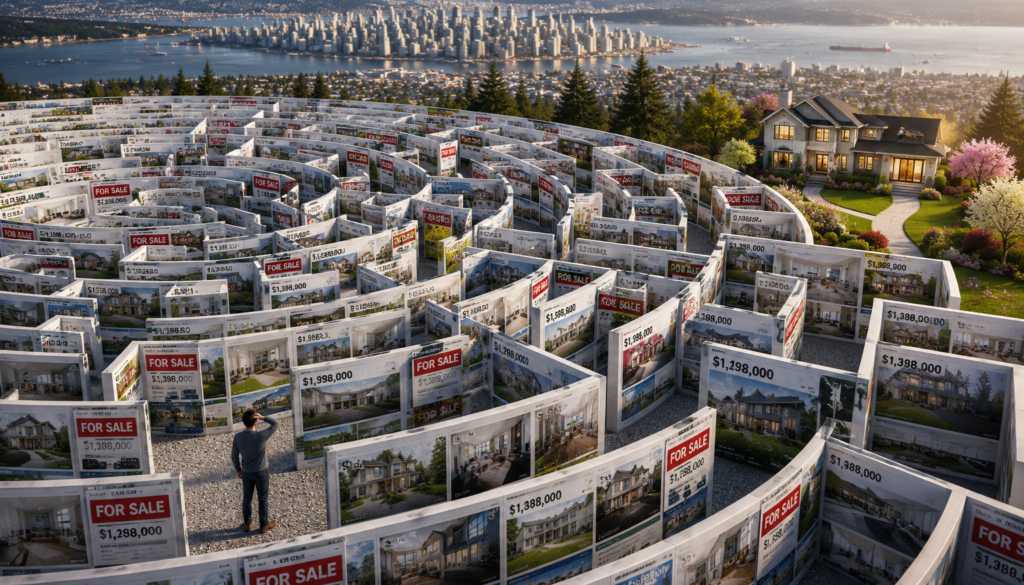
Decision Fatigue Is Real — And It’s Quietly Costing Buyers the Right Home
If you’ve been searching for a home for a while and you’re starting to feel worn down, foggy, or like every property is starting to blur into the next — that’s not just tiredness. It has a name: decision fatigue. And in today’s market, it’s one of the most common reasons buyers either miss out on the right home or end up settling for one they’re not truly happy with.
This isn’t about being indecisive or difficult. It’s about what happens to anyone’s ability to think clearly after making too many choices over too long a period of time. Understanding it is the first step to making sure it doesn’t erode and overwhelm you on one of the biggest decisions of your life.
What Decision Fatigue Actually Is
The idea behind decision fatigue is pretty simple. Every choice you make — big or small — uses up a little bit of mental energy. And when that energy runs low, the quality of your decisions starts to drop. You either become overly cautious and avoid deciding anything at all, or you go the other way and make a quick call just to be done with it.
In everyday life this might look like grabbing whatever’s easiest for dinner after a long day at work. In real estate it can look like dismissing a genuinely good property because you’re too tired to think it through — or saying yes to something that doesn’t really fit because you just want the search to be over.
Psychologist Barry Schwartz described something called the paradox of choice — the idea that having too many options doesn’t make decisions easier, it makes them harder. And right now, with inventory in Metro Vancouver higher than it’s been in years, buyers have more options than they’ve had in a long time. That sounds like a good thing. And it is — but only if you go into the search with a clear head and a clear plan.
What It Looks Like in Real Life
Decision fatigue in home buying tends to show up in a few recognizable ways.
The first is analysis paralysis. You’ve seen a lot of homes. You’ve made a lot of comparisons. And now every time a new listing comes up, instead of being excited you feel more overwhelmed. You start pulling up spreadsheets, reading every review of the neighbourhood, watching the market stats obsessively — and somehow the more information you gather, the harder it gets to feel sure about anything.
The second is moving the goalposts. You started out with a clear list of what you needed. Somewhere along the way, that list starts to grow. Now you’re waiting for a home that checks every single box — and when one comes close but isn’t perfect, you talk yourself out of it. The search keeps going, the fatigue builds, and the gap between what’s available and what you think you want keeps getting wider.
The third is the snap decision. This is the flip side. After months of searching and second-guessing, a property comes up and you make an offer faster than you normally would — not because everything adds up, but because you’re just done searching. Sometimes that works out. Sometimes it leads to buyer’s remorse — and research shows that around 82% of recent home buyers have at least one regret about their purchase, with many saying they moved too fast or didn’t ask enough questions beforehand.
Why Today’s Market Makes It Worse
In 2021, the market moved so fast that buyers didn’t have time to overthink things. That was a problem of its own — but at least it was over quickly. Today’s market is different. There’s more time, more inventory, more data available online, and more opportunity to go down research rabbit holes at midnight.
More choice and more time sounds like a better situation for buyers. And in many ways it is. But it also creates the conditions for decision fatigue to set in — especially when the search stretches on for months and every weekend involves yet another round of showings, comparisons, and conversations about what to do.
Add to that the background noise of economic uncertainty — rate discussions, tariff headlines, market predictions — and it’s easy to see why a lot of buyers are feeling mentally worn out before they’ve even made an offer.
What Actually Helps
The most useful thing a buyer can do before the search gets serious is get genuinely clear on two things: what they actually need, and why they’re buying in the first place.
Not a wish list. Not a rough idea. A real, honest answer to the question of what matters most — the things that would make a home work for your life right now, not the perfect version of a home five years from now.
When you have that clarity, it becomes a filter. Instead of evaluating every property against an ever-growing mental checklist, you’re asking a much simpler question: does this work for what I actually need? That cuts through a lot of the noise.
It also helps to limit how much information you’re taking in at once. Browsing listings late at night after a long day, watching every market update video, and reading every opinion piece about where prices are heading — none of that helps you make a better decision. Most of it just adds to the fog. Give yourself set times to look at listings, and outside of those times, let it go.
And lean on your agent to help you sort through the options before you go to viewings — not after. A good agent who understands what you’re actually looking for can do a lot of the filtering work upfront, so that the homes you’re walking through are already a reasonable fit. That alone reduces the number of choices you’re making every weekend and saves your mental energy for the decisions that actually matter.
The Bottom Line
The right home is out there. But finding it takes more than just looking — it takes being in the right headspace to actually recognize it when you see it. Decision fatigue is what gets in the way of that. It makes good options look ordinary and ordinary options look fine.
Go in with a clear plan, a short and honest list of what you need, and the willingness to trust your gut when something genuinely fits. The search doesn’t have to go on forever — and it shouldn’t have to.
Sources & Further Reading
Clever Real Estate. American Home Buyer Report: 2024 Edition.
Century 21 Real Estate. New Research on the Mindset of Today’s Homebuyers. September 2024.