
What First-Time Buyers in Vancouver Wish They Knew a Year After Buying
Buying your first home in Vancouver is a big deal. It takes years of saving, months of searching, and a lot of patience — especially in one of the most expensive housing markets in the world. And when you finally get the keys, it feels like the hard part is over.
But talk to most first-time buyers a year later and you’ll hear a version of the same thing: there were things they wish someone had told them before they signed. Not to scare them off — but just so they could have gone in a little more prepared.
This article is that conversation. The things that come up again and again once the excitement settles and real life as a homeowner kicks in.
The Costs Nobody Warned Them About
Almost every first-time buyer says some version of this: “I knew about the down payment. I didn’t know about everything else.”
And it’s true. The purchase price is what gets all the attention. But in Vancouver, closing costs alone can run anywhere from 1.5% to 4% of the home’s value — and that’s before you’ve moved in. Property transfer tax, legal fees, title insurance, home inspection, and adjustments for prepaid strata fees or property taxes all come due around the same time. For a $700,000 condo, that could easily add up to $15,000 or more on top of your down payment — money that needs to be liquid and ready, not sitting in an investment account.
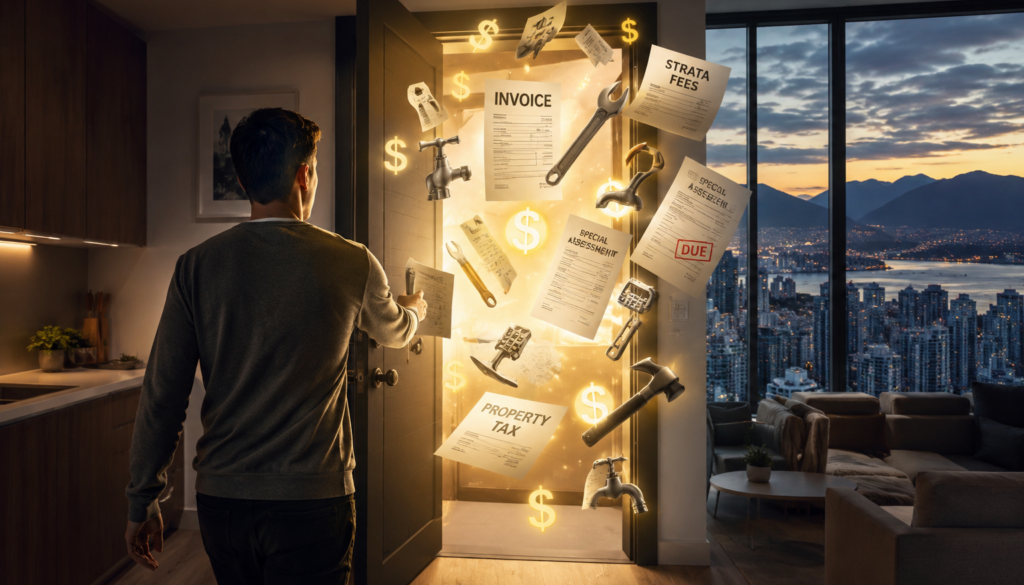
Then there are the costs that hit after you move in. Furniture. Appliances. Small repairs you didn’t notice during the showing. Utility setup. And if you’re in a strata building — which most first-time buyers in Vancouver are — the monthly strata fees are just the beginning. What surprises people most is the special assessment: a one-time charge that gets levied on every unit when the building needs a major repair that isn’t covered by the contingency reserve fund. These can range from a few thousand dollars to tens of thousands, depending on the building and the work required. And they can show up without much warning.
The lesson most buyers take away: budget for at least 3% to 5% on top of your purchase price for closing costs, and keep a separate emergency fund for the first year of ownership. Don’t drain everything just to close.
They Underestimated What the Strata Documents Were Telling Them
For condo and townhouse buyers, this one comes up a lot. The strata documents are handed over during the subject removal period, and there’s a tendency to skim them — especially when you’re excited and the clock is ticking.
A year later, some buyers wish they had slowed down and read more carefully. The meeting minutes in particular tell you a lot about a building that the listing never will. Ongoing disputes between owners and the strata council, complaints about noise or leaks, deferred maintenance decisions, a reserve fund that’s running low — all of it is in there if you know what to look for.
The depreciation report is just as important. It maps out what major repairs the building will need over the next 30 years and gives you a sense of whether the money is actually set aside to pay for them. If it isn’t, someone is going to be asked to cover the gap. And that someone is every owner in the building.
Taking the time to actually understand those documents — or having your agent walk you through the key parts — is one of the most valuable things a first-time buyer can do.
They Compromised on Location More Than They Expected
This is a tough one because it’s often unavoidable in Vancouver. The budget stretches further in certain areas, and when you’re trying to get into the market for the first time, you go where the numbers work.
But a year in, a lot of buyers are honest about the fact that location matters more in daily life than they thought it would. The commute that seemed manageable on paper feels different when you’re doing it five days a week. The neighbourhood that looked fine on Google Maps has a different feel at different times of day. The lack of nearby green space, transit, or everyday amenities becomes something you notice — and then keep noticing.
This isn’t a reason to hold out for the perfect location forever. But it is worth spending real time in a neighbourhood before you commit — not just during a 20-minute showing on a Saturday afternoon. Walk around in the evening. Check the commute on a Tuesday morning. Ask yourself honestly whether you can see yourself there for the next five to seven years.
They Wished They Had Asked More Questions
Buying a home involves a lot of people — your agent, the mortgage broker, the lawyer or notary, the home inspector. First-time buyers often feel like they should already know things, and they hold back on questions they feel might sound basic.
A year later, most of them say: ask every question you have. No question is too simple when you’re spending hundreds of thousands of dollars on something you’ll live in for years. What does this clause in the contract actually mean? What happens if the financing changes before completion? What should I be looking for in this inspection report? What is this strata fee actually covering?
The people you’re working with are there to help you understand the process — not just move through it. Use them.
The Part They Got Right
Here’s the other side of the conversation — and it’s worth saying clearly. Most first-time buyers, even the ones with regrets about specific decisions, are glad they bought.
A year in, they’re building equity instead of paying rent. They have stability and something that’s theirs. They’ve figured out the costs and adjusted their budget. And in a city where the average age of a first-time buyer has now climbed to around 46 — pushed up by years of affordability challenges — most people who get in feel relieved they didn’t wait any longer.
The goal isn’t a perfect first home. It’s a smart first step. And the people who go in prepared — who understand the real costs, read the documents, think honestly about location, and ask the questions they need to ask — tend to look back on the experience with a lot more confidence than those who didn’t.
Sources & Further Reading
Vancouver House Finders. First-Time Homebuyer Statistics and Challenges in 2025.
Ontario Housing Market. Vancouver’s First-Time Homebuyer Age Has Exploded to 46 in 2025.
Arise Mortgage. Hidden Costs of Buying a Home in Canada Most First-Time Buyers Forget.
Vancity Blog. The Hidden Costs of Home Ownership. September 2025.
Real City Group. Hidden Costs of Buying a Home in Canada.
The Canadian Home. Canadian Home Buyer Regrets: Tips to Avoid Costly Mistakes.